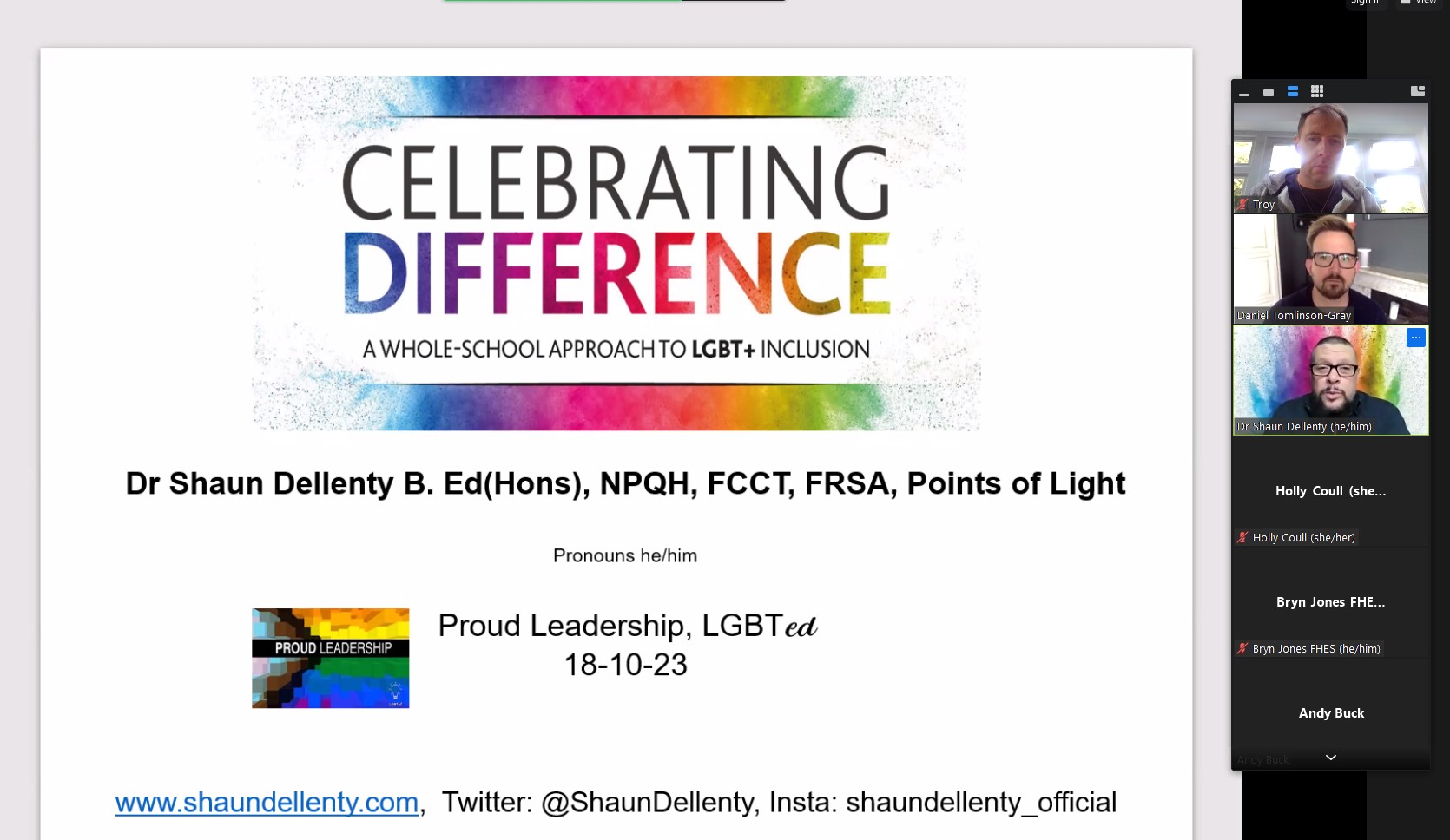
I recently listened to Dr Shaun Dellenty presenting with the LGBTed network. He talked passionately about his accidental/unplanned journey throughout his educational career, making changes for the better regarding equality. I harked back to growing up and starting my career during Section 28. In recent training sessions I delivered to a Multi Academy Trust in the north of the country, only a handful of staff had even heard about this debilitating clause to the Local Authority Act, let alone understood its impact on the lives of the LGBTQ community for over two decades and the legacy its left.
I reflected upon where my education around LGBTQ relevant topics came from; the television, media, playground gossip… all negative and damaging initially. My enlightening moment was Russell T. Davies’ “Queer As Folk” with positive queer characters tackling issues facing the LGBTQ community at the time in 1999. Not once was I formally taught about LGBTQ safe sex, the culture or the positive impact queer pioneers had in sports, science and (social) history. Quite the contrary, I was ridiculed and teachers turned a blind eye (perhaps because they were scared themselves). The lasting impact resulted in me leading a double life; not only as a secondary student where I suppressed my authentic self, but as a fledgling teacher separating my personal and professional lives. Effectively, having to think about how I kept the real me hidden, prevented me focusing on teaching and being a good role model to students who were potentially questioning, themselves.
My take away from recent collaborations is “the power of sharing and connection.” Sharing stories, making connections with people and learning from one another’s experiences. I resonate with this as there is a huge power in sharing vulnerabilities and how we effectively deal with them.
I consider myself to be lucky enough to have survived my educational experience and thrived in school leadership, yet I hadn’t considered the true impact hiding my authenticity had had on my mental health. In October 2022, the toll of these stresses prompted my decision to regain control of my educational journey.
Don’t get me wrong, I feel privileged to have led three very different schools; affording me the ability to grow and develop as a leader. My final headship taught me a lot about myself. Walking across the playground in those very early days, hearing homophobic slurs being used unchallenged, brought back the traumas of childhood. It galvanised me to become the role model I should have been from the outset and in the process saw me writing my first children’s book “The Best Mummy Snails in the Whole Wide World.” Like Shaun Dellenty’s accidental journey, I fell into the role of author while creating representation for the diverse families at the school.
My stance on antibullying provided my school and I the opportunity to work alongside a number of supportive individuals, giving rise to sharing my stories with other schools/organisations; leading assemblies/workshops for children and adults alike. Only now, I realise how vital my journey has been to provide positive visibility to empower others to be their authentic selves.
So how is this relevant now? In the current political climate with the rise of hate speech on social media, it is now more than ever, I feel the need to raise my head above the parapet and speak out. I have heard time and again, how recent party-political conference speeches echo the historical prejudices towards the queer community that underpinned 1988’s Section 28! The incitement of hatred towards the trans community in potential policy-making is being, and NEEDS to be, challenged by the very UK law passed to make all individuals feel safe and valued. The Equality Act, introduced by, some might say, a more enlightened government. The language and rhetoric of prominent voices today is divisive. We should be mindful and stand together. If we allow one minority group to be targeted, we allow misogynistic views to take hold and risk the freedoms we have so valiantly fought for, being diminished.
Just Like Us (2021) argue LGBTQ pupils are far more likely to experience suicidal thoughts than heteronormative counterparts (68% compared to 29%). This increases to 77% in the Trans community. This early trauma is long lasting. Indeed Section 28 continues to influence lives of many 40-60 year-olds, even today, with mental health difficulties. It hadn’t occurred to me how I had been subjected to it, until I started listening to the powerful stories of others in networks I’ve attended.
Ultimately, providing a voice for all people to feel safe to be who they are, is a safeguarding issue; challenging politicised prejudice and protecting all marginalised groups. It is there in print in “Keeping Children Safe In Education” (2023) and the Equality Act (2010). These documents support leaders when they are challenged about providing support for marginalised groups.
It has taken me a long time to come to terms with my journey. Only through listening to journeys of others, have I made connections. Joined the dots. As Catherine Lee (2020) puts it, LGBTQ leaders have five key attributes in abundance that equip them to be exceptional leaders; those of reading others, commitment to inclusion, approachability, courageous risk takers and good managers of uncertainty. If this blog inspires someone to make sense of their own journey, knowing they are not alone and, maybe take a leap into leadership, I will be thrilled.
Book here if you want to arrange for Troy’s author visits and/or staff training or follow on Instagram @troy.jenkinson.author


 Troy Jenkinson