
Interviewed by Troy Jenkinson
Mr Jones was Head of PE & Expressive Arts at Dayncourt from 1971 to 2004.
TJ So you were there when it was the first year of Dayncourt?
Mr J From 1971. First year of Dayncourt. It morphed from about 210 pupils, I can’t give you a precise number, to over a thousand. Half of them were from Cotgrave. The biggest memory of that was the number of school buses that used to come up Cropwell Road. Norman Froggatt used to organise them. Also we had a sixth form of about 6 to start with.
TJ The sixth form didn’t have a base did it? I didn’t realise it was built so late after the rest of the school.
Mr J No, the sixth form was built during my time, next to the swimming pool.
TJ When were you at Dayncourt then?
Mr J 1971 to 2004. Then I stayed on doing projects when we became a sports college. Dave Bullas was instrumental in doing the bid I helped him. Dave unfortunately died in his 40’s a great loss to his family and the school. I lost a great friend. We achieved sports college status.
TJ So what did that do for the school?
Mr J It empowered us to do a lot of community work both in Radcliffe and Cotgrave. We did summer schools and talented and gifted programs. It generated some funds and made a reason for getting the all-weather pitch which would have cost over a million at the time.
TJ That’s still used…
Mr J Oh yes and the facilities were named after Dave Bullas.

TJ You mentioned about Philip Andrew and how he empowered you. What kinds of things did he do to support?
Mr J He was always there to listen as he did with all the staff. He was more than a head. He used to talk things over. In 1995 I got invited to take a basketball team over to Poland as part of the Nottinghamshire County Council initiative. It was called Nottinghamshire in Poznan week. While I was there I was chatted up by a local school; School Number 7 to organise a Polish exchange. He really supported that and got involved. On one of the Exchanges he came with us on the bus for 36 hours. It was really special for the head to come with us to be part of the team. They were really hammering the links with Poland. On the initial trip they chartered a plane to go from East Midlands to Poznan; it wasn’t a commercial airport then, it was a military airport and they took all kinds of people including members from the County Council, representatives from local businesses as well as a number of groups including drama and sports teams. They were there to promote Nottinghamshire.
TJ Why Poland though?
Mr J I don’t know. The Polish exchange lasted for more than 10 years. Marion Pyatt and I were the main organisers
TJ What a fantastic opportunity. I bet those kids would have definitely remembered that…
Mr J Oh yeah, I’ve got quite a lot of memorabilia about it. I have projects that the students did. We always insisted the pupils did a workbook. We were talking about Philip and how much he supported this. Whenever they came here, he used to put on an evening for their staff at his house. He would do a fantastic spread for the teachers, coach drivers were also invited. Other Dayncourt teachers involved with the change did the same. Then Phil Clarke took over and he was very supportive too.
TJ I think he (Philip) joined a few years after it became a comprehensive.
Mr J David Butterfield was the first one (headteacher). He left because of health problems and
went to live in Dorset.
TJ So you were there when it first changed to comprehensive then. I’ve been told the building wasn’t as it was when I remember being there (as a student). I think it was Philip who told me the A Block was built first and the Music block but you were working with the children on site while the other phases were being built.
Mr J It was carefully managed with teachers on duty. It was state of the art then. The school was building up from 210 to a thousand. It peaked a lot over a thousand. We had so many buses. A late bus was also organised for those who wanted to do after school activities to take them back to Cotgrave. I think there was a problem with supervision.
TJ Talking to a former student who was at the secondary modern as it changed to a comprehensive. She was saying the old library and Mr Andrew’s office was completely different to when I was there…
Mr J Well the dining room became the library. I think the library formerly was in the new building.
TJ Philip told me about the houses being named after Canadian states.
Mr J That’s right, Vancouver, Manitoba, Alberta, Ontario,
TJ From a sports perspective, did you do things like inter-house competitions and things?
Mr J There were very active sports days. They had to be held down at Bingham Road Sports Field. The whole school had to be marched down to Bingham Road. The staff came into its own on these occasions supervising the various events. Most of the staff were involved but it wasn’t the only thing that Bingham Road was used for. There was a fantastic event that happened over three years. Jason King and the humanities department organised an event called “The Big Push.” I have a scrap book of memorabilia; there were press cuttings from the Daily Telegraph, the Post… There are programmes from different years.
TJ I spoke to Jason King. He was telling me about the major who lived in Cotgrave and used to march at the front. He was telling me about the explosives that used to be set off on the field.
Mr J Oh yes… What about the Tiger Moth that used to come over and he was riding through Radcliffe on a horse. The reason I got involved was I helped out a little with the publicity. There is a lot of good stuff in the scrapbook.
TJ A lot of this, you created for the archives at South Notts, so I have seen some of these bits.
Mr J Another thing you might not know; a famous BBC radio personality called David Jamieson did a 7 minute interview with Jason that went out on the morning on the BBC.
TJ I took part in the Big Push, maybe the second year that you did it. I was given the job of being a reporter. I had to write about it all.
Mr J Well they transformed Bingham Road with straw bails. Big marquees that were the field hospitals.
TJ It seemed like it was a team effort with “The Big Push.”
Mr J It was. It wasn’t just the humanities department. Many others were involved. Norman and his department were involved with building replica tanks. It is a long time ago though isn’t it? 30 something years? It went on for three years.
TJ Have you got other photos of the school?
Mr J All with pupils. Lots from the Polish exchange. We were really strict with them. They used to be hosted by families and we would meet them first thing in the morning. Then when we first went it was a bit daunting – they would go and live in Polish homes. The school Number 7 was in the middle of a high rise estate but the people they were staying with were doctors and from other professions. I have quite a few pictures which I have been putting together.
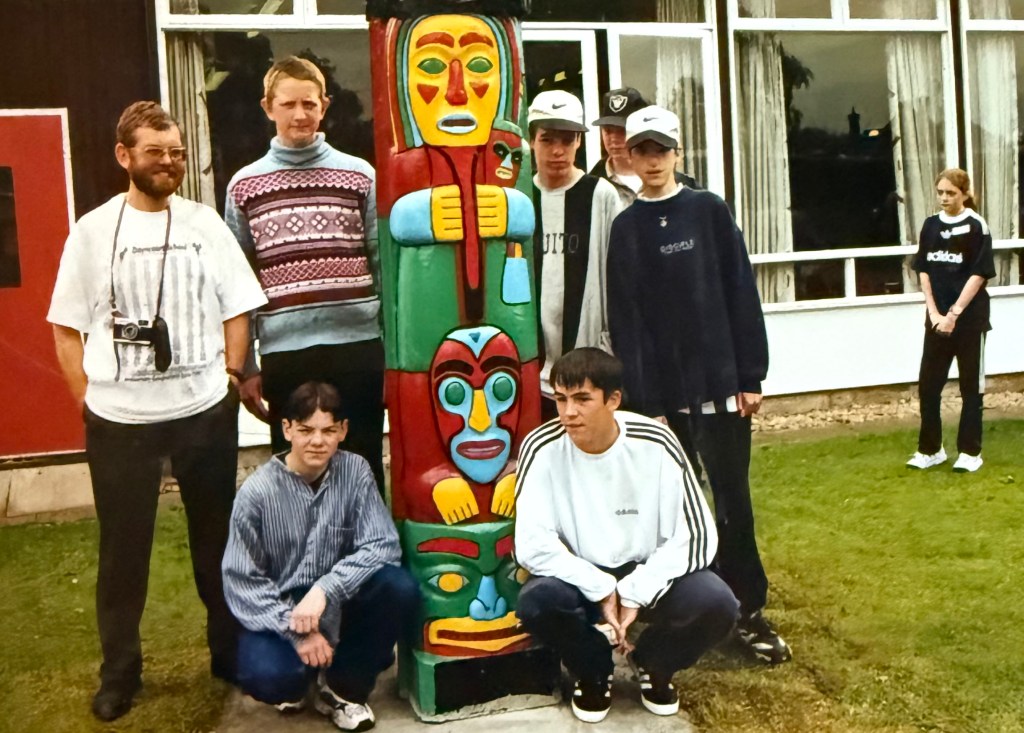
Now that totem pole there, Jason might fill you in more; it decayed and the GPO gave us a telegraph pole and they got some people over from Canada to carve and paint it. I don’t know if that’s it. There were two or three of them around the school, one in front of the school…
TJ There’s one outside the Grange in the village now as well. Mr King said the grounds were planted with Canadian Maple trees…
Mr J It was a big feature that… I have a picture of when it was commemorated. It was someone called Albans who attended the old secondary school and Mo Mowlam, a European Member of Parliament. It must have been before 2000…
TJ So have you got any funny stories from working at Dayncourt?
Mr J I can tell you some funny stories about the Polish exchange from when the teachers came over and had school dinners… one of the teachers, an educational psychologist that came with them. He had a curry; it was a self-service and he put custard on his curry because he thought it was the right thing to do.
I found it a happy school. I was there for nearly its whole entirety. I have pictures from the new school ceremony, when they built the new school. The head there now is Dan Philpotts. There are some pictures of him as the head, some pupils and some dignitaries, and Richard Whitehead; he worked at Dayncourt in special needs – he’s got four gold medals in the Olympics.
TJ He (Richard Whitehead) did some outreach work when I worked at the Church School (Cotgrave) and he did some assemblies to talk about what he did but then we did a swimming gala. We always did a staff verses Y6s race. He came along and joined the staff team. He was very humble with the kids. I remember him walking onto the poolside in his tracksuit and then literally took his legs off and the parent’s’ faces dropped. The kids were totally non-plussed about it; they were fine. The reaction was amazing. He did a lengthy of butterfly and then slowed down for the Y6 kid to pass him.
Mr J He went around the sports, did Richard. He did the Winter Olympics stuff. He did tobogganing and as well as sprinting he ran marathons. We had another former pupil para-Olympian who got silver in Paris in canoeing; David Philipson his name is. The school swimming pool had to be adapted for him and others with a hoist. The school had to have a special lift in the humanities block. That would be the 80s I think.
The majority of parents were fantastic in supporting the school.. Another memory I have is from 1997, we hosted the English Table Tennis Academy. I was called in on my holidays and asked if I would organise it. It was a bit of a headache. They lived in Holme Pierrepont but came to us for education. We had to adapt their timetable and it was a bit of a challenge to get some of the teachers on side because some didn’t believe in children spending so much time on sports. Then funnily enough when I retired, there was the Lawn Tennis Academy in Loughborough and 4 kids who had the investment of psychologists, personal trainers and sports scientists. We had to go out and teach them for 3 hours a week to get the equivalent of 5 GCSEs at the time. We did BTEC because that was worth 2 GCSEs.. One got into the junior Wimbledon mixed doubles final. Teaching them GCSE BTEC was an obvious choice because some of their work was incredible. When they went through for assessment, I marked them and I thought we can’t possibly be getting “A”s with the time they had put in but the chief moderator gave them A*s because of their background knowledge and the work they produced.
TJ This is one of the issues with education today in that it doesn’t necessarily cater adaptively to meet the strengths of some of the individuals.
Mr J That was the beauty of Dayncourt. If you had a particular strength, you were encouraged.
TJ The trips always stick in your mind… I think Philip told me about those.
Mr J He went on lots of the trips. He went to Poland and other trips. I came from Rochdale to Dayncourt – that’s where my first teaching was. I discovered a place called Pendle Hill. We organised trip up there to learn about the Pendle Witches. That was where the idea of workbooks came from. We all camped in a field at Gisburn near to Pendle Hill. The main expedition was to go to the top of the hill which to them was like Mount Everest. It was very highly supervised. We would do three days with three year groups and then the next three days with the others. The whole school year went up. The teachers were so supportive. Some went up with their caravans to support the trips. Teachers would all muck in with sports as well. We had Saturday fixtures in those days.
Later on after Pendle Hill we did two expeditions to Norway. Maggie Brown and Dave Ditcham were involved with that.
TJ She was very complementary about that and the Pendle trips. I don’t remember that trip myself though.
Mr J Pendle was before your time. That was in 1973. It was the first big initiative. We went in Lamcote buses. The thing about the Norway trip was that we took the mini bus but it wasn’t used for the kids. We took it to take the camping equipment. We took the kids by public transport. We took them to Newcastle and then to Bergen on the ferry and then we got the Fjord boat to Liekhanger and a bus over the mountains. Two thirds up the mountain was the campsite. We had all the tents in the minibus. Maggie was in charge of the food. For weeks on end, she was weighing out powdered ingredients. She and Dave got there FRGS from the Royal Geographic Society
The school was very active on field trips. They went to the Isle of Aran. My daughter went on that. I know they did some to Northumberland as well.
TJ There were a lot of trips. At the time when there was a lot of unrest in the mining community, money was tight. But my parents always tried to make sure I could go on the trips.
Mr J I was brought up in a mining village. I lived through the war years, World War 2. My grandparents lived in Rossington near Doncaster. I was sent there during the war to get away from London. I spent virtually every summer up there for the next few years So I know the miners. It was really touching what they would try and do but my cousin, a woman, wasn’t allowed to go to grammar school because of the expense.
TJ Because she was a woman? When I was at Dayncourt, it was one of the few schools that taught mixed PE.
Mr J Yeah. It’s now gone back to single sex PE from what I understand.
TJ You had quite a big PE department didn’t you?
Mr J Yes. Then I became head of the Expressive Arts Faculty and Dave Bullas became Head of PE. It was an administrative thing with music, art, drama, textiles, PE all combined. The drama department; Sally Garden was in charge. She was very conscientious.
TJ I was quite shy and felt uncomfortable in drama but she always made me feel at ease. Did art come under that as well?
Mr J Yes. We had artists in residents as well but I can’t remember much about that. Music was in expressive arts.
TJ All the GCSE and sixth form art was displayed everywhere. It was like a massive exhibition.
TJ I was talking to a friend who went to school in Grantham, they were completely blown away when I talked about the amazing facilities we had at Dayncourt.
Mr J Yeah…. I’ve got friends whose kids go there. Recently I was in St Wulfram’s Church in Grantham and they were rehearsing a big musical event in the church. They must be very strong on that side of things. It was entirely different there. But we would have fixtures against them. They also have an Army Cadet Force.
TJ Tell me about the PE facilities that you had got at Dayncourt.
Mr J Well that’s a saga that is… they built the sports hall early on. We had a choice of lighting or heat. We didn’t have heat in the sports hall. Later on we had campaigns to get the council to inject money to give us heat. When people used to come round to inspect we used to put all the kids in their overcoats and anoraks when they were doing their PE. Eventually we did get heating and then it caused a nightmare. It used to cause condensation on the floor and without warning it would become like an ice rink. Literally within minutes, the kids would be running around quite safely and then it would become slippery and we had to stop the lesson.
The swimming pool was also built early on. But we had a tragedy there when a caretaker Mr Webb committed suicide in the pool. I always remember that morning because we had to supervise the kids so they went nowhere near.
TJ So they found him the day the kids were gonna be in?
Mr J Yeah. Actually it was the junior schools that were going to be in because they used it so many days a week.
In the sports hall, we hosted a TV show the Rolf Harris Show. He was the star of the show. Before he came to England, he was an youth Australian Champion. He saw the pool and he wanted to swim every morning. It was arranged.
The pool caused problems if we wanted to do a swimming gala because it was 20 yards in length. Records were all in meters. We also had a group called the Brotherhood of Man who came high up in the Eurovision Song Contest, alongside Rolf Harris. There was a Nottingham policeman, Tug Wilson, a 7 foot, 2 copper. He made a guest appearance.
TJ Cause one of his paintings was donated to the school wasn’t it?
Mr J Yeah. I don’t know what happened to it. Then we had another show called Beatle drive which was a children’s programme with Michaela Strachen. The story was that they had a VW Beetle and they started talking about basketball and they went past the school and said “Oh look there’s a school there who must play basketball.” Then they went in and did a show. That would be late 80s.
The big event every year though was the staff pantomime. Neil Matthews and Dave Bullas, John Crowley and all them. I got roped in one year. I popped in to see if they wanted any help doing the scenery and ended up with 3 parts.
TJ It was always mad because all the teachers used to forget their lines.
Mr J Well that’s another funny bit because they used to have different prompts around and behind the stage. One day before one of the shows, one of the crew changed them around. So it made for a laugh.
TJ The students enjoyed coming to see it because it was light-hearted.
Mr J We had Frank Bruno come and collect a cheque one year and we had Stuart Pearce from Forest FC.
Health and safety got tighter as the years went on… if you did trips, form filling was a nightmare. One of the problems you had 2002 when we did a lot of work in the junior schools, if you wanted to take photos, you had to have parental consent forms, one or two wouldn’t sign them. We did a summer school where we took them to the Arches at Trent Bridge. An outdoor education thing, but you had to be careful that you didn’t have pupils in the photos that shouldn’t be. They had this system at the junior school where they had yellow badges that they put on the children who you couldn’t take photographs of. Usually when you took your pictures, the best ones were the ones with the children with the yellow badges so you couldn’t use them. I understand though that the reasoning behinds this as safeguarding is an important issue. Between 2002 and 2006 we did lots of work in the feeder schools. We got our pupils mentoring those in the feeder schools. We arranged for Richard Whitehead to go out into the schools. We had to make a bid for money from the Youth Sports Trust, we had to explain how we would involve community groups. A big section were the plans with the feeder schools.
TJ What would you say was your worst memory of Dayncourt?
Mr J Well it would be the tragedies. There was one family whose sons were sports mad. One was tobogganing in Radcliffe and hit a tree and became paralysed. As if that wasn’t bad enough, his brother who was a keen basketball player. He went out on a night out in Nottingham and he got run over by a bus. It affected me– he was so popular, talented and keen. There was another lad, . He was a professional motor cyclist and he got killed racing in China. Anything like that really impacts you.
TJ You remember a lot of people…
Mr J Yeah, I remember them, both academic and not. Maggie Brown is better than me at remembering what Dayncourt pupils have gone on to do. We had Nathan Robertson, silver medalist – . I remember when he was in the final in Athens, his mates flew out to support him.
TJ This is why I’m doing this. It is important to think about these things. Dayncourt was central to the communities of Cotgrave and Radcliffe.
Mr J I was a little bit sad when I left. When it went into Academy status and changed its name – but at the same time happy to see the shiny new facilities and I am certain the Academy is progressing well.
TJ Do you think this was because it lost Philip Andrew?
Mr J Phil Clarke was an able replacement and was very supportive.
TJ It paid dividends though as it got a good reputation and that means bums on seats.
Mr J It was amazing though some of the high flyers that we had who were good at sport. I’m talking about those at the next level; county and nationally. If you got to the national level you had a lot of time off. This had to be managed. They still got good grades, got good careers.
Another thing we used to have were activities weeks. The last two weeks of term, we used to open it up and teachers used to teach their favourite things. We had Nigel Ingram who used to have scrabble classes. There would be a massive amount of sports. There used to be a lot of trips going around the place in July before they broke up. The timetable was just completely abandoned and teachers volunteered to do things they wanted to do and had expertise in. The Nottingham Open was on so we took people there. Drama went on.
TJ Mainly the soft skills. Learning respect and how to work as a team. It is still Dayncourt in my mind though.
Mr J Mine too, forever. I wasn’t there when it became an academy. I was there nearly the whole length of its history. I think perhaps 2 years or so after I retired it was still going as Dayncourt before it changed to South Notts Academy. I remember school uniform. There was a lot of debate amongst the staff. In the end it became jumpers with the Dayncourt crest. I see it has become the full uniform again. The turquoise and yellow in the ties was quite trendy at that time.
TJ Did it always have that tie?
Mr J Yeah… for a whole duration. But of course the ties were eliminated when they got the jumpers. Polo shirts and jumpers. They looked quite smart.
TJ When I upload it and circulate it on social media, I’m hoping I get some people reading it and remembering these things. That then sparks more memories.
Mr J That’s really interesting for me to hear other people’s memories of this too.
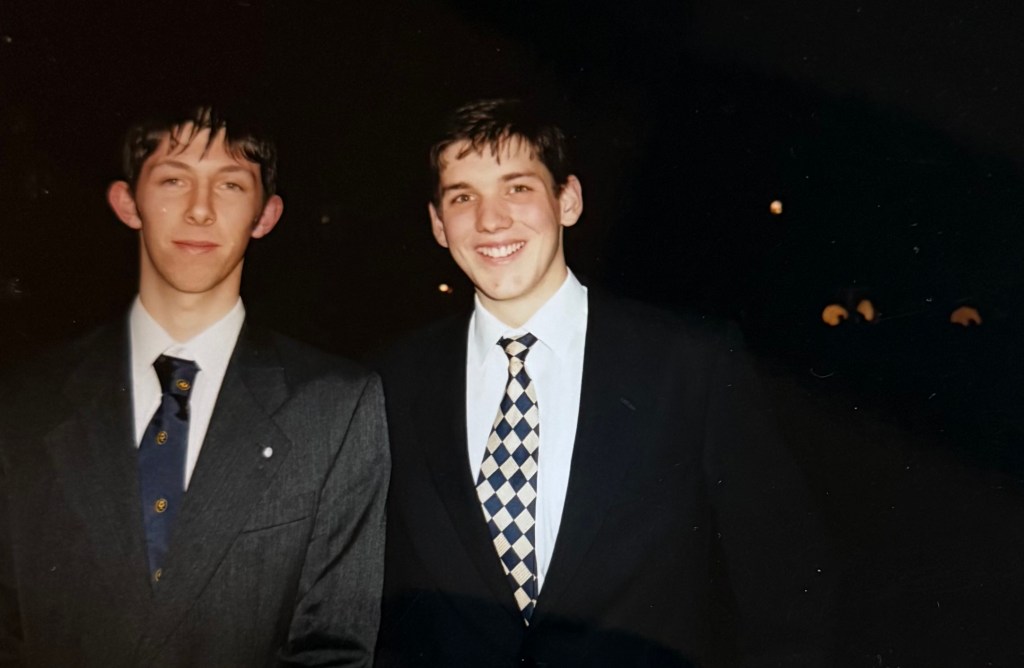
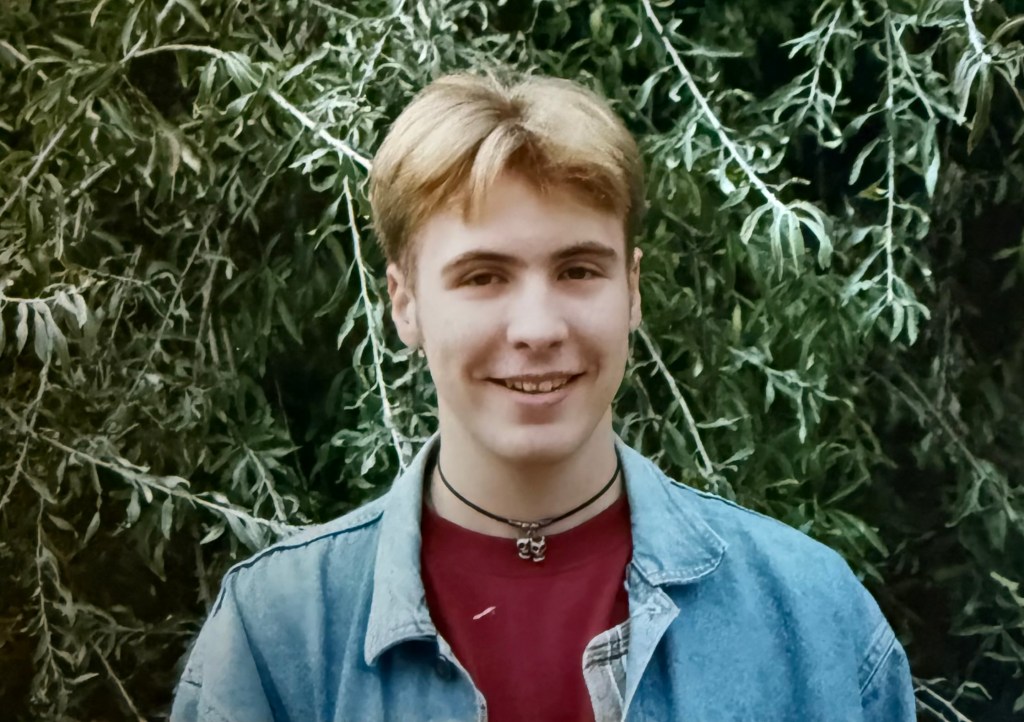
Check out these photos and if you recognise yourself (or one of your friends) in one of these photos, get in touch and let me know.



 Troy Jenkinson